
Amid increasing volatility and recession fears looming over global markets that has led to the decline in wealth of a number of billionaires, Gautam Adani was the only one to buck the trend. The billionaire added $43.3 billion in net worth between Diwali 2021 (November 4) and this year's Diwali (October 24) according to Bloomberg data. He added more wealth than the gross domestic product (GDP)of more than a dozen Indian states.

Expenditure on new projects slowed down for the second quarter in a row amid an uncertain global environment and higher borrowing costs. There were new projects worth a cumulative Rs 3.26 trillion in the July-September period, according to data provided by project tracker Centre for Monitoring Indian Economy (CMIE). This figure is much less than Rs 4.39 trillion in the June quarter (Q1FY23) and Rs 8.46 trillion in the March quarter (Q4FY22).

Two firms belonging to the Adani group - India's most valued conglomerate - are part of the Nifty 50 index. The group, however, has no representation in the Sensex. And it could stay this way if a proposed index qualification rule change gets approved. Recently, Asia Index, a joint venture between S&P Dow Jones Indices and BSE responsible for index composition, floated a consultation paper where it proposed that a stock must have a derivative contract to be eligible for inclusion in the flagship 30-share Sensex index.

India's crude oil imports are coming in from a changing mix of countries, with the top three accounting for around 60 per cent of total imports. Russia emerged as the largest source of crude oil imports for India in June, as per the latest available data from the Organization of the Petroleum Exporting Countries (OPEC). The data which is released with a lag, showed that Russian imports accounted for 24 per cent of the total crude imports into the country.

The Rs 38-trillion mutual fund (MF) industry is going through a new fund offer (NFO) rush. Since July 1, the industry has launched close to 70 NFOs. This follows the completion of a near three-month embargo period when the industry had vowed to not launch any new offerings till the time it implemented norms around pooling of investor accounts. As a result, between April and June 2022, the industry was able to launch just three NFOs.

In August, domestic equity markets garnered one of the highest foreign portfolio investor (FPI) flows since the outbreak of the pandemic in 2020, despite the US Federal Reserve standing firm on unwinding its stimulus measures to control inflation. FPIs pumped in over Rs 51,000 crore ($6.4 billion) in August, the most since December 2020 and the third-highest tally since March 2020-the month the Covid-19 pandemic roiled global markets. This was the second consecutive month of positive foreign flows. In the preceding nine months, FPIs had yanked out over $32 billion or Rs 2.2 trillion.

The states recording the highest number of such deaths include Karnataka (14.3 per cent), Maharashtra (13.2 per cent), and Madhya Pradesh (11.3 per cent). Tamil Nadu (9.4 per cent) and Telangana (7.5 per cent) were the other two in the top five.

'The idea is to invest where there is opportunity.'

'The power sector accounts for much of the financial burden of state governments in India.'

Nearly four decades ago, when Rakesh Jhunjhunwala was a young chartered accountant in training, he was paid a conveyance of Rs 60. Deductions would take away Rs 15 from this princely sum and he was left with Rs 45 by the time the allowance made its way to his hands. He would save as much as he could from this amount, so that he would have a small amount to spend when he met his friends on the weekend at Chicken Centre. This was an eatery popular with the young at the time, perhaps because food and drink were affordable even for those new to the workforce.

George Acland from Great Britain ran a coffee plantation in Sri Lanka and set up India's first jute mill in 1855. He raised capital and imported the machinery for the mill on the banks of the Hooghly in West Bengal. His company wasn't a great success, but his pioneering work paved the way for India to dominate the jute industry.

Stock exchanges have increased scrutiny of investors domiciled in Sikkim, following reports of illegal routing of investments through the Northeast state to evade taxes. The National Stock Exchange (NSE) has directed its trading members (brokers) to re-verify and certify investors who have declared their permanent address as Sikkim. Further, brokers have been told to maintain a vigil on the location of devices used by Sikkim-based clients for trading to ensure these are genuine investors from the region.

After the massive sell-off since October, foreign portfolio investors (FPIs) are no longer the biggest non-promoter-shareholders in top Indian companies. This has happened for the first time in over a decade. "At 25.6 per cent ownership of India's largest 75 companies, domestic investors are now larger holders than FPIs for the first time since 2010," said Morgan Stanley strategists Ridham Desai, Sheela Rathi and Nayant Parekh in a note.

The number of serious incidents has more than doubled in the last seven years.

'The potential headwind is that the Indian economy is likely to see a slowdown in growth rates over the next two years.'

Investors are pushing back more often against companies' resolutions on what is paid out to top executives. In the first four months of financial year 2022-23 (FY23), there have already been five such rejections, according to shareholder voting data from tracker Adrian, a platform maintained by the proxy advisory firm Institutional Investor Advisory Services India (IiAS). Two of these have been at multiplex chain PVR and direct-to-home company Dish TV India.
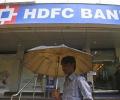
Foreign portfolio investors (FPIs) continue to cut their shareholding in both Housing Development Finance Corp (HDFC) and HDFC Bank. As per latest data, during the June 2022-23 quarter (Q1FY23), FPIs held 68.1 per cent and 65.96 per cent, respectively, in HDFC and HDFC Bank. Overseas shareholding is down 111/406 basis points (bps) and 260/412 bps on the quarter-on-quarter (QoQ)/year-to-date (YTD) basis in HDFC and HDFC Bank, respectively.

During Abe's tenure, Japan had announced support for a number of major projects. These included the bullet train project between Mumbai and Ahmedabad, besides allocations for a freight corridor between Mumbai and New Delhi.

Domestic new-age companies are making their presence felt at India Inc. According to a study done by Credit Suisse, only 15 per cent of the companies in the BSE500 index were formed after the year 2000. By comparison, nearly 90 per cent of unicorns - a start-up with a value of over $1 billion - were set up after 2000.

Most of the long-only funds are closed-ended. This means that investors have to lock in their money for a fixed period before they can take it back.
 © 2026 Rediff.com - Investor Information - Advertise with us - Disclaimer - Privacy Policy - Sitemap - Feedback - About us - Terms of use - Grievances